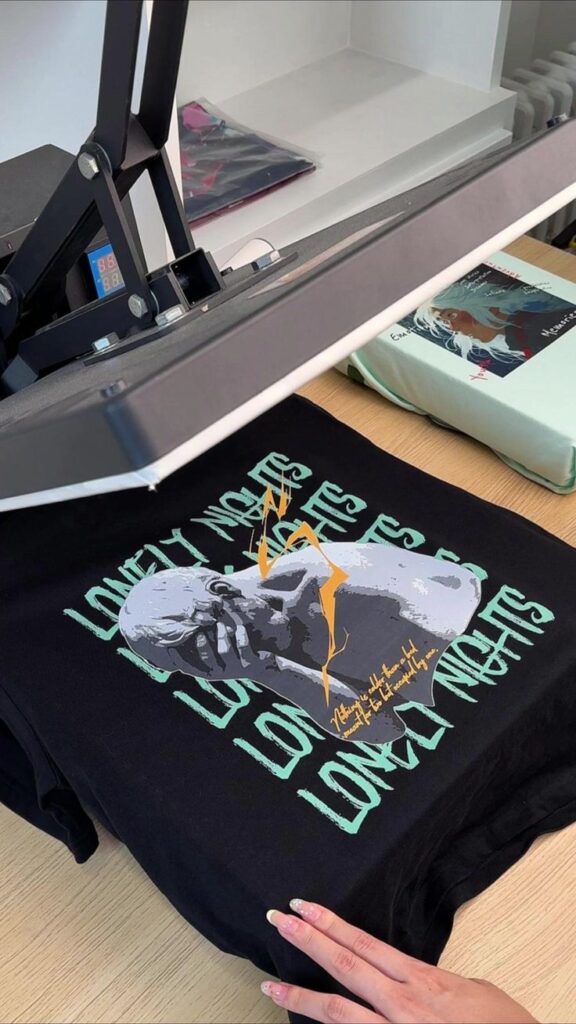
Picture this: you just landed an order for 30 branded t-shirts, and the client wants them by next week. No time to waste, no huge budget either. That’s usually the moment heat transfer printing enters the picture. Small shops use it. So do large uniform suppliers. It’s stuck around for a reason. At Asiantex, we’ve handled this method for brands of all sizes, and we’ve learned exactly where it works and where it doesn’t.
In this detailed guide, we’ll walk you through the process, the cost, the trade-offs, and where this method actually earns its keep.
How Does Heat Transfer Printing Work?
Here’s how heat transfer printing process works:
Step 1: Create or Print the Design
Everything begins with the artwork. Most designers build or edit files in Illustrator or Photoshop. Then either print them onto transfer paper or cut them from vinyl. Getting the colors right at this stage matters a lot, since screen colors rarely match fabric colors exactly.
Step 2: Prepare the Garment or Surface
Before anything touches the heat press, the garment gets a quick pre-press to remove moisture and flatten out wrinkles. Skip this and you’ll likely deal with bubbling or patchy adhesion down the line.
Step 3: Apply Heat and Pressure
The heat press runs somewhere around 300 to 320 degrees Fahrenheit, pressing down for roughly 10 to 15 seconds. These numbers aren’t fixed though. They shift based on fabric type and which transfer method you’re using.
Step 4: Remove the Carrier Sheet
Once the pressing is done, the backing sheet comes off. Some transfers need a hot peel, so you remove it right away while it’s still warm. Others need a cold peel, meaning you wait for it to cool first. Get this step wrong and you’ll probably see cracking or peeling sooner than you’d like.
Step 5: Final Inspection and Finishing
Last step, and it’s a simple one. Check for full adhesion, no lifted edges, no scorch marks. Trim any loose threads, fold, and pack.
How Much Does Heat Transfer Printing Cost?
Real numbers help more than vague ranges, so let’s break down what you’re actually looking at. For heat transfer vinyl (HTV), material costs typically run between $2 and $5 per sheet. Consumables for DTF transfers cost around $0.30 to $1 per shirt for film and powder. On the equipment side, a decent heat press machine for a small setup costs between $150 and $500.
Labor matters too, and it’s often overlooked. One industry pricing breakdown found that with a $15 hourly wage and a one-minute press cycle per shirt, direct labor cost lands around $0.25 per shirt, since a single operator can push out roughly 60 shirts an hour.
Here’s a rough cost comparison based on order size:
| Order Size | Heat Transfer Cost (per shirt) | Screen Printing Cost (per shirt) |
| 1–11 pieces | Material + labor stays fairly flat, roughly $3–$6 | $9.31 for a one-color print |
| 24 pieces | Similar per-piece cost, minimal drop | Drops to $4.62 |
| 60 pieces | Cost stays close to small-batch pricing | Drops further to $2.80 |
| 240+ pieces | Still similar per-piece cost, no real scale benefit | Around $2.75 even for a 4-color print |
This table makes the core trade-off obvious. Heat transfer pricing barely moves no matter how many pieces you order, while screen printing gets dramatically cheaper per shirt as volume goes up. One screen printing shop in Nevada put it simply: for bulk orders past 120 pieces, screen printing becomes the more cost-effective method, with better long-term durability too.
As an apparel manufacturing company in USA, Asiantex works with brands running everything from single sample pieces to much larger batches, and we help them find where the numbers actually make sense for their specific order.
Types of Heat Transfer Printing
Not every heat transfer works the same way. Each type fits a different kind of job.
1. Heat Transfer Vinyl (HTV)
HTV gets cut from vinyl sheets using a plotter, then pressed onto the fabric. Great for text, numbers, and clean logos. A lot of people know this as iron-on heat transfer printing, especially when it’s done at home with a basic press or even a regular iron.
2. Printed Heat Transfers
These start as printed designs on special transfer paper, then get pressed onto the garment. Compared to vinyl, they handle full-color and detailed artwork much better. That’s how photos and gradients come out cleaner.
3. Sublimation Transfers
Sublimation is a bit different. The ink turns into gas and actually bonds with the fabric fibers instead of sitting on top. That’s why it feels so soft. But it only works properly on polyester or polyester-coated materials.
4. Direct-to-Film (DTF) Transfers
DTF is newer and prints designs onto a film first, then uses adhesive powder and heat to transfer it. It picks up fine detail well and works across cotton, polyester, and blends. It’s a solid pick when you’re running mixed-fabric orders.
Pros of Heat Transfer Printing
There’s a reason this method has stuck around for so long.
Excellent Print Quality
Fine detail, gradients, photo-based designs, all of it comes out sharper than what you’d typically get from screen printing.
Ideal for Custom and Personalized Orders
Need one shirt with a single name on it? Or fifty shirts each with a different design? Custom heat transfer designs make that kind of small, personalized work realistic without a big setup cost every single time.
Vibrant Full-Color Designs
Screen printing needs a new screen for each color. Heat transfer skips that entirely and handles unlimited colors in one pass, which keeps busy, colorful artwork simple to produce.
Low Initial Setup Costs
No screens. No plates. No long prep process. You can go from a finished design file to a wearable product pretty quickly.
Fast Production for Small Runs
For small custom t-shirt orders, this is often the most practical route simply because there’s so little setup involved. You’re not paying for machine prep that only pays off at higher volumes anyway.
Compatible with Various Products
It’s not just t-shirts either. Caps, tote bags, hoodies, even some hard surfaces can take a heat transfer, which opens up more room for businesses to expand what they sell.
Cons of Heat Transfer Printing
Fair’s fair, so here’s where this method comes up short.
Higher Cost for Bulk Orders
Since the per-piece price barely moves as your order grows, large bulk runs usually end up cheaper with a different printing method.
Durability Depends on Material and Care
Heat transfer printing durability really comes down to how the garment gets treated after printing. Wash it inside out, stick to cold water, skip high heat in the dryer, and the design lasts a lot longer. Ignore all that, and you’ll probably see cracking or fading sooner than you’d expect.
Not Suitable for Every Fabric
Heat transfer printing on polyester works well, especially with sublimation, since the ink bonds right into the fibers. But other transfer types can react differently on heat-sensitive fabrics like nylon, sometimes leading to scorching or weak adhesion.
Risk of Peeling or Cracking Over Time
Even when you follow proper care instructions, some transfers wear down after repeated washes, particularly with cheaper materials or a rushed application.
Requires Specialized Equipment
A decent heat press matters more than people expect. Cheap or inconsistent equipment usually means uneven pressure, and that shows up later as patchy or peeling prints.
Best Use Cases for Heat Transfer Printing
Given everything above, here’s where this method tends to make the most sense.
Custom T-Shirts: Small batches, personalized requests, one-off orders, all of it fits naturally here.
Sports Jerseys: Names and numbers get added fast without needing a new screen setup for every single variation.
Corporate Uniforms: Logos and employee names can go on consistently across a batch without a huge upfront cost.
Promotional Merchandise: Trade show shirts, event giveaways, branded items, these usually need quick turnaround, and that’s exactly where this method does well.
Personalized Gifts: Birthday shirts, family reunion designs, custom photo prints, each piece can be different without adding extra cost.
Small Business Merchandise: Heat transfer printing for small business owners works well because it keeps startup costs low while still looking professional.
Still weighing things out? Our FAQs page answers some of the common questions we get about materials and minimum order sizes.
Heat Transfer Printing vs. Other Printing Methods
Choosing between methods usually comes down to putting them side by side.
Heat Transfer Printing vs. Screen Printing
When people bring up heat transfer vs screen printing, it usually comes down to a handful of factors. Screen printing costs less per piece once you’re at high volume, but it needs more setup time upfront. Heat transfer wins out for small orders and detailed designs, though the cost climbs as quantity increases. Screen printing tends to hold up longer for heavy, repeated wear. While heat transfer suits shorter runs or one-off pieces better.
Running a large order? Our Screen Printing Services in USA might save you more in the long run.
Heat Transfer Printing vs. DTG (Direct-to-Garment)
DTG prints straight onto fabric using specialized printers. And it does great on cotton but struggles on polyester or blended fabrics. Heat transfer covers a wider range of materials. DTG can pull slightly more detail out of cotton garments, but heat transfer usually keeps things moving faster on mixed-fabric orders. Cost lands pretty close between the two, mostly depending on how complex the design is.
Heat Transfer Printing vs. Sublimation Printing
Sublimation only works on polyester or polyester-coated items, while heat transfer handles cotton, blends, and more. Colors from sublimation tend to stay vibrant longer since the ink becomes part of the fabric itself. Heat transfer gives you more flexibility across fabric types. But since the print sits on the surface, it may not hold up quite as long.
Read our guide “Screen Printing vs DTG vs DTF: Which is Best for Your Brand?” for a more detailed comparison.
Choosing the Right Printing Method for Your Business
It really comes down to your order size, fabric choice, budget, and how fast you need things done. Small custom batches usually lean toward heat transfer. Larger bulk orders tend to favor screen printing. And if long-lasting branding on uniforms matters more than one-time designs, our Custom Embroidery Services for Apparel Brands might suit your needs better than any printing method.
Why Businesses Choose Asiantex for Heat Transfer Printing
We’ve handled orders ranging from single samples to much bigger production runs over the years. Our heat transfer printing services stay consistent whether you need five shirts or five hundred, with real attention paid to fabric compatibility and finishing at every stage.
Final Thoughts
We hope with this blog, you get to know that heat transfer printing won’t fit every single project out there. For small runs, custom work, and quick turnarounds, it holds up as one of the more practical options around. Yes it comes with trade-offs, particularly around bulk pricing and long-term wear. But for the right job, it gets solid results without demanding a big upfront investment.
Still unsure what fits your order best? Get a free printing quote and we’ll help you sort out the right path forward.
FAQs
1. What is heat transfer printing and is it durable?
A design gets pressed onto fabric with heat, and how long it lasts depends mostly on the fabric type and the care it gets afterward.
2. What’s the difference between heat transfer printing and screen printing?
Small orders suit heat transfer better, but once quantities grow, screen printing usually costs less per piece.
3. Is heat transfer printing a good choice for small clothing brands?
For most small brands, this method keeps setup costs down while still handling custom, low-quantity batches well.
4. Does heat transfer printing work on all fabrics?
Not every fabric responds the same way. Nylon and some synthetics can react poorly under heat.
5. Why does heat transfer vinyl crack or peel?
Rough washing, dryer heat, or a rushed press job are the usual reasons a transfer starts wearing out early.
6. How much does heat transfer printing typically cost per shirt?
Prices shift based on design and material, though small batches often fall somewhere around $3 to $6 per shirt.
7. Can heat transfer printing be used for multi-color designs?
Multiple colors aren’t a problem here, since there’s no need for separate setups like screen printing requires.
8. How long does heat transfer printing last?
A well-applied transfer, cared for properly, can easily hold up for a year or more.
9. Can heat transfer printing be used for bulk orders?
It’s possible, but the price per piece doesn’t drop much, so bulk runs often cost less with screen printing instead.
10. Which is better: heat transfer printing, DTF, or sublimation?
There’s no single winner here. The right pick depends on your fabric choice and how many pieces you need.