Embroidery vs Screen Printing T Shirts: Which Method Fits Your Design?
Ordering custom t-shirts sounds simple until someone asks whether you want embroidery or screen printing. Both look good on a sample. Both come with someone telling you it’s the smarter choice. The real answer depends on three things: your design, your budget, and how many shirts you’re ordering.
This guide will walk you through embroidery vs screen printing t-shirts so you can make that call yourself.
Embroidery vs Screen Printing: Quick Comparison
Here’s the quick version before we get into the details.
Embroidery feels premium. You can run your thumb over the stitching and actually feel it. It holds up for years, even through weekly commercial washes, but it costs more when you’re only ordering a handful of pieces and it can’t handle super fine detail or shading. Screen printing does the opposite. It’s flat, bold, and cheap once your order size grows past a couple dozen shirts. However, the ink sits on top of the fabric rather than in it, so it wears down faster over time.
| Factor | Embroidery | Screen Printing |
| Look and feel | Raised, textured, premium | Flat, smooth, vibrant |
| Best for | Logos, small text, structured garments | Large graphics, bold colors, flat fabrics |
| Small orders (under 25) | Usually cheaper | Setup fees make it pricier |
| Bulk orders (100+) | Cost stays roughly the same per piece | Gets cheaper per piece as quantity grows |
| Durability | Holds up through years of washing | Can fade or crack over time |
| Detail level | Limited, struggles with gradients | Handles fine detail and shading well |
So which one actually wins? Neither, really. It comes down to what you’re putting the design on, how many you need, and whether the artwork has fine detail or just a clean logo. If you’re after the best printing method for t-shirts, that answer changes depending on the job in front of you. And we’ll get into exactly how below.
What Is the Difference Between Embroidery and Screen Printing?
In simple words, one method uses thread, the other uses ink. But the way each is applied changes everything about how your shirt looks, feels, and holds up. People ask is embroidery better than screen printing constantly, expecting a one-word answer. There isn’t one.
How Embroidery Works
A machine reads a digitized file and stitches your design directly into the fabric, thread by thread. That’s why embroidered logos have weight and texture you can feel with your hand, not just see. Stitch count drives most of the cost here. A basic logo might only need a few thousand stitches. A detailed crest or wordmark can climb into the tens of thousands, and that pushes both price and turnaround up.
If you want to see this process at work on real orders, explore our custom embroidered t-shirt manufacturer usa capabilities and what we can produce in-house.
How Screen Printing Works
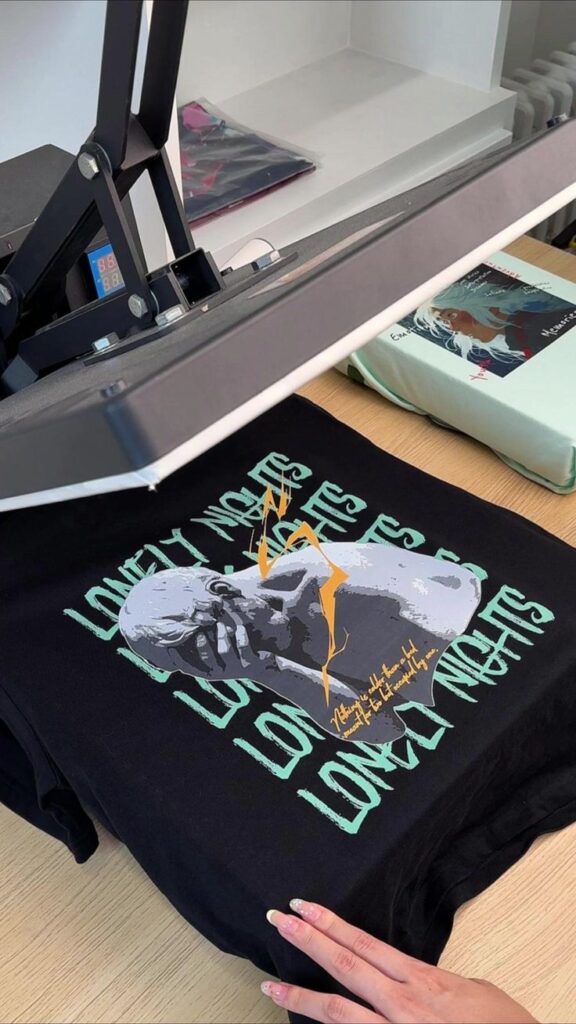
Screen printing works backwards from that. First, a stencil, called a screen, gets made for each color in your artwork. Ink is pushed through the screen onto the shirt, one color layer at a time, then heat-cured so it bonds to the fibers. Curious how this stacks up against newer digital methods? We already broke that down when we compare screen printing with DTG and DTF options in a separate guide. For now, just remember that more colors means more screens. And more screens means more setup time before a single shirt gets printed.
Key Differences Between Embroidery and Screen Printing
Appearance and Overall Style
Touch is the giveaway here. Run a finger across an embroidered logo and you feel every stitch rise slightly off the fabric. Depending on the angle you’re looking from, light hits the thread differently too, which gives it that extra bit of polish people notice without quite knowing why. That texture is a big part of why the embroidered logo vs printed logo shirts question keeps coming up for anything client-facing, staff uniforms, polos, that sort of thing.
Screen printing takes the opposite path. Instead of building texture, it lays color flat against the shirt. And it’s good at that job. Bold, saturated ink covering a large chest or back panel is something thread just can’t pull off the same way.
Design Complexity
Gradients, shading, photo-style artwork? That’s screen printing territory. Ink blends in ways thread physically can’t. Embroidery shines with clean lines, bold text, and simple logos. But pushing it too far into fine detail and things start to blur. Tiny embroidered letters, in particular, tend to smudge together once they drop below a certain size.
Durability and Longevity
Ask around and this is usually the deciding factor for a lot of buyers. Thread gets sewn straight into the fabric during embroidery, not laid on top of it, which is exactly why it survives heavy commercial washing so well. Type embroidery vs print for t-shirts durability into Google and you’ll see this come up again and again, particularly for structured pieces like caps, jackets, and polos that get washed constantly.
That’s not a knock against screen printing, to be clear. Good ink, properly cured, can last for years without much trouble. But it sits on top of the fabric rather than inside it. So over time, you’ll start to notice fading around the edges or the print cracking slightly where the fabric flexes most.
Color and Detail
Ink wins this round. Screen printing handles practically unlimited colors and subtle shading without much added cost. Embroidery is stuck with whatever thread colors are available, and every additional color you add increases both stitch count and price.
Placement and Garment Type
Sturdier fabrics, polos, caps, jackets, heavier cottons, give embroidery something firm to grip. Try stitching heavy designs into something thin and stretchy and you’ll end up with puckering. Screen printing plays nicer across more surfaces. T-shirts, hoodies, tote bags, anything flat enough to hold the design works fine.
Embroidery vs Screen Printing Cost: Which Is Cheaper?
This is the question everyone actually cares about, and the honest answer depends entirely on your order size. People searching which is cheaper embroidery or screen printing are often comparing two very different cost structures without realizing it.
Screen printing charges a setup fee per color, since each one needs its own screen. Spread that fee across a big order and the cost per shirt drops fast. Embroidery works differently. You pay a one-time digitizing fee to convert your artwork into a stitch file. And after that, your per-shirt cost stays roughly flat no matter how many you order.
Cost Comparison Table
| Order Size | Better Value | Why |
| Small batch (under 25 pieces) | Embroidery | No per-color setup fees eating into a small order |
| Medium batch (25-100 pieces) | Depends on the design | Screen printing starts competing, embroidery still wins on structured garments |
| Large batch (100+ pieces) | Screen printing | Setup cost shrinks to a small fraction of the total |
Want the full math behind embroidery pricing? See full pricing breakdown for custom printing in our detailed cost guide.
When Should You Choose Embroidery?
Go with embroidery when you want something that looks and feels a step above the ordinary, particularly on smaller orders. Corporate uniforms, client-facing polos, caps, branded jackets, these are embroidery’s home turf. It also survives years of regular wear, which matters if your team is putting these shirts on week after week. Looking for a custom embroidered t-shirt manufacturer USA businesses trust for consistent stitch quality? This is the direction to head.
When Should You Choose Screen Printing?
Screen printing fits better when quantity and bold color matter more than texture. Event shirts, promo giveaways, band merch, big batch orders where every shirt looks identical, this is where it earns its keep. If you need a custom printed t-shirt manufacturer USA teams rely on for fast turnaround on large runs, screen printing gets you there quicker and at a lower cost per piece.
The Design Test: A Simple Way to Choose the Right Method
Still stuck between the two? Run your project through this checklist:
- Gradients, shading, or photo-style art in the design? Screen printing handles that better.
- Simple logo, clean text, or line art? Embroidery will look sharper and last longer.
- Ordering under 25 pieces? Embroidery is usually the cheaper route.
- Ordering over 100 pieces of the same design? Screen printing typically wins on price.
- Thin or stretchy fabric? Skip heavy embroidery and go with print instead.
Custom T-Shirt Printing and Embroidery at Asiantex
At Asiantex, we handle both methods in-house, so you’re not forced to commit to one before you even know which fits your project. We look at your artwork, your garment choice, and your order size, then tell you straight which method makes more sense for your budget and timeline. Need detailed stitching on structured garments? Check out our embroidery services. Planning to order screen printed t-shirts bulk for an event, product launch, or staff rollout? Our custom printing services are built exactly for that kind of volume. We keep pricing and timelines clear from the first quote. So nothing surprises you once production starts.
Got questions about minimum order size, turnaround, or fabric options? Head over to our FAQs page.
Sum Up
There’s no clear winner in the embroidery vs screen printing t-shirt conversation, and anyone claiming otherwise is probably just trying to sell you their method. What matters is your design, your fabric, your budget, and your order size. Small batch with a simple logo? Embroidery. Bulk order with bold, detailed graphics? Screen printing.
Still not sure which one fits your project? Contact us and we’ll help you figure it out.
FAQs
1. Does embroidery last longer than screen printing?
In our experience, embroidery tends to hold up a bit better over time, though a lot still comes down to wash care and thread quality too.
2. Is embroidery more expensive than screen printing?
Not always. Small orders, embroidery often works out cheaper since you’re not paying setup fees per color.
3. Can you use embroidery and screen printing on the same shirt?
Yes, quite a few brands do this actually, a stitched logo up front, printed design on the back tends to work nicely.
4. Which is better for a business logo, embroidery or screen printing?
For most logos, embroidery edges ahead, especially on polos or anything worn in front of clients.
5. Does embroidery work on all types of T-shirt fabric?
Not every fabric handles it well. Thinner or stretchy material can pucker, so sturdier cotton usually works out better.
6. Which is better for large designs, embroidery or screen printing?
Screen printing tends to make a bit more sense for bigger designs, mainly because covering that much area in thread usually gets pricey fast.
7. Is screen printing cheaper for bulk T-shirt orders?
For larger runs, often yes, since the setup cost spreads across more shirts and brings the per piece price down.
8. Which method is better for small T-shirt orders?
Smaller orders often lean toward embroidery, mostly because there’s no added fee for each color like screen printing has.
9. Can embroidery reproduce detailed or multicolor designs?
It has limits there. Fine detail and blended colors are tricky with thread, ink handles that side much better.
10. Which method is better for T-shirts, embroidery or screen printing?
It depends on the project, your fabric, budget, and order size all play into it more than any one method being outright better.