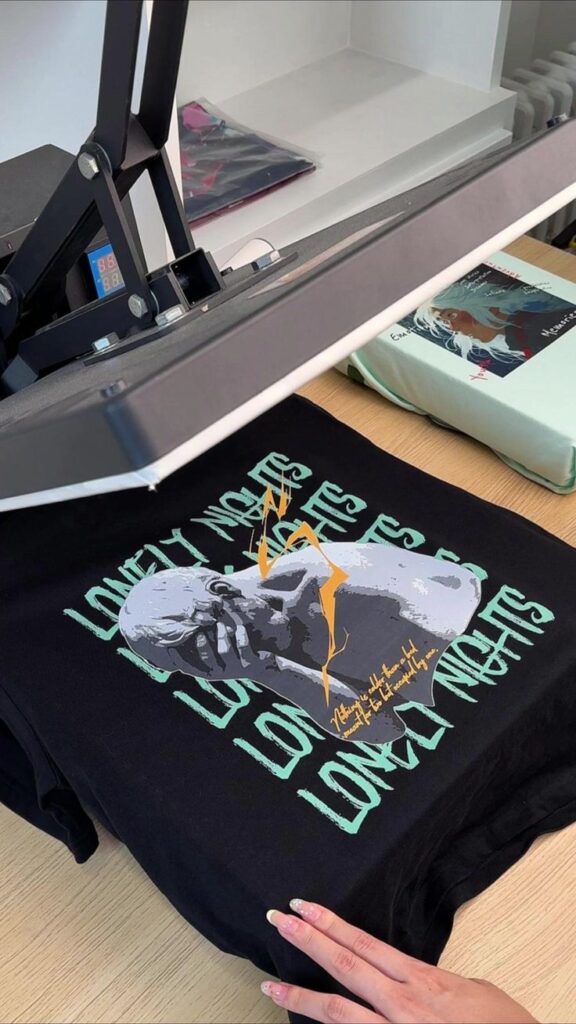
If you’re building a clothing brand and stuck comparing private label vs wholesale t-shirt manufacturing, you’re not alone. Almost every apparel founder hits this fork in the road once orders start coming in and “just buying blank tees” doesn’t cut it anymore. The choice isn’t really about which model sounds better on paper. It comes down to your order volume, how much brand control you want, and how much time you’re willing to spend before your first shirt ships out.
This guide breaks down both models honestly. So you can pick the one that actually matches where your brand stands right now.
What Is Wholesale T-Shirt Manufacturing?
Wholesale manufacturing means buying t-shirts that already exist. They’re pre-made, often in generic or blank form, and produced in bulk so the price per unit drops. You’re not designing anything from scratch here. You’re picking from what’s already on the shelf and buying a lot of it.
This is the model most boutiques, resellers, and small retail shops rely on. A wholesale t-shirt manufacturer for retailers usually keeps a catalog of ready-to-order styles, colors, and sizes. and you place your order against that catalog instead of building something new.
Pros of Wholesale T-Shirt Manufacturing
- Lower cost per unit, especially at high volumes
- Faster turnaround since there’s no design or development stage
- Good way to test demand without a big upfront commitment
- Simple reordering once you know what sells
Working with a wholesale t-shirt manufacturer USA based also cuts down shipping delays and makes reorders a lot smoother compared to sourcing everything overseas. When your stock runs low, you don’t want to wait six weeks for a container to clear customs.
Cons of Wholesale T-Shirt Manufacturing
The obvious downside is that you’re selling the same shirt someone else could be selling too. There’s no brand story built into a blank tee. Customization options are usually limited to what’s already offered, and if your goal is to build something people recognize as yours, wholesale makes that harder. You’re competing mostly on price, not identity.
What Is Private Label T-Shirt Manufacturing?
Private label flips the script. The manufacturer still handles production, but everything that makes the shirt “yours” comes from you. That means your neck labels, your hang tags, your fabric choice, sometimes even your fit specs. The factory builds it, but the brand identity is entirely yours to shape.
A private label t-shirt manufacturer USA based partner is becoming the go-to option for startups that want shorter lead times and easier back-and-forth communication during sampling. Working with someone across time zones sounds fine until you’re trying to fix a label placement issue at 2am.
Pros of Private Label T-Shirt Manufacturing
Full ownership over how the shirt looks and feels is the biggest draw here. Some things private label opens up:
- Custom woven or printed neck labels and hang tags
- Choice of fabric weight, blend, and cut
- More control over quality since you’re setting the spec, not picking from a catalog
- Room to build a premium, distinct product instead of a commodity one
This is also why so many people search for a custom clothing manufacturer for startups. Early-stage brands need flexibility. And private label gives them a way to look established without needing a massive factory relationship. And if you’re planning to add embroidered branding rather than just a printed label, fabric choice matters more than most first-time founders expect. Certain blends hold stitching cleaner than others, which is worth understanding before you lock in your fabric. We cover that in detail in our best fabric for embroidery guide.
Cons of Private Label T-Shirt Manufacturing
MOQs (minimum order quantities) tend to run higher than simply buying stock wholesale, though still lower than a full custom cut and sew operation. Setup takes longer too. You’re making decisions on fabric, fit, labeling, and print method before production even starts. That adds weeks to your timeline compared to grabbing something off the shelf.
Private Label vs Wholesale T-Shirts: Side-by-Side Comparison
The difference between private label and wholesale really comes down to how much you’re building versus how much you’re buying. Here’s the quick version:
| Factor | Wholesale | Private Label |
| Branding control | None or minimal | Full |
| MOQ | Usually lower | Moderate to higher |
| Cost per unit | Lower | Higher upfront |
| Lead time | Fast | Longer |
| Best suited for | Retailers, resellers | DTC brands, startups building identity |
| Product uniqueness | Low | High |
Neither one is objectively better. It depends entirely on what stage your business is at and what you’re actually trying to build.
Cost Comparison: Which Model Is More Cost-Effective?
This is where a lot of founders get stuck comparing dollar signs without looking at the full picture.
Wholesale wins on raw unit economics, especially at low volumes. A basic blank tee can run anywhere from $3 to $8 depending on fabric quality, and buying pre-made stock skips the sampling and tooling costs entirely. If you just need a product to sell fast, this is cheaper on day one, no question.
Private label costs more per unit early on. You’re paying for tech packs, sampling rounds, and setup, and MOQs for private label runs typically sit somewhere between 100 and 500 pieces per style. That’s a real investment before you’ve sold a single shirt. But that upfront cost buys you pricing power later. A generic blank shirt has a ceiling on what customers will pay for it. A branded, well-made private label tee doesn’t have that same ceiling, because customers are paying for the brand as much as the fabric.
The good news is that low MOQ private label t-shirt manufacturer USA partners have narrowed this gap quite a bit over the past few years. It’s not the all-or-nothing commitment it used to be. You can start smaller and scale up as demand proves itself.
Print method changes the math too. Screen printing, DTG, and DTF all carry different setup costs and per-unit pricing depending on your order size, and picking the wrong one for your volume can quietly eat your margin. We broke this down properly in our screen printing vs DTG vs DTF guide if you want the specifics.
When Should You Choose Private Label Over Wholesale?
There’s no universal answer here, but a few signals tend to point clearly toward private label.
If you already have some traction, an audience, a following, repeat customers, then wholesale starts to feel limiting. People aren’t just buying a shirt from you, they’re buying into your brand, and a generic tee doesn’t reflect that. This is usually the point where people start looking into how to start a private label t-shirt brand, because the demand for something distinct is already there.
Private label also makes more sense when differentiation isn’t optional. In crowded niches like streetwear or fitness apparel, selling the same blank shirt as five other sellers in your space is a losing game long term.
On the flip side, if you’re still testing whether people even want your product, wholesale is the safer starting point. There’s less locked in, and pivoting costs you far less if the idea doesn’t land. The question of private label vs wholesale clothing which is better really just depends on whether you’re testing an idea or scaling one that’s already working.
Common Mistakes Brands Make When Choosing a Manufacturing Model
A few patterns show up again and again with founders figuring out how to start a private label t-shirt brand for the first time:
- Underestimating the MOQ commitment and locking into more inventory than they can move
- Ignoring lead times, then scrambling when a launch date collides with production delays
- Skipping sample approval to save a week, then finding sizing or fabric issues after bulk production runs
- Choosing based only on unit price instead of total landed cost, including shipping, duties, and rework
- Not properly vetting a manufacturer’s actual capabilities before committing
That last one matters more than people realize. If you’re going to hire a private label t-shirt manufacturer, ask to see real samples of their work before signing off on a bulk order. A polished website doesn’t always match what comes out of the factory.
Build a Stronger Clothing Brand with Asiantex’s Private Label Manufacturing
This is where Asiantex comes in, though we’ll keep this section grounded in what we actually do rather than making big promises.
Through our private label t-shirt manufacturer USA service, we handle custom woven and printed labels, in-house quality checks before shipping, and a proper sample approval process so you’re not guessing what the final product will look like. We also support embroidery and multiple print methods depending on what your design calls for.
If wholesale fits your stage better right now, that’s fine too. We work with both models depending on what a brand actually needs. You can see our full apparel manufacturing services to get a sense of the full range.
Conclusion
At the end of the day, private label vs wholesale t-shirt manufacturing isn’t a question with one right answer. Wholesale gets you moving fast with less commitment. Private label gives you something that’s genuinely yours, at the cost of more time and a bigger upfront investment. The right pick depends on where your brand actually is right now, not where you hope it’ll be in a year.
Still weighing MOQs, timelines, or which model fits your budget? Our FAQs cover a lot of the common questions we get from founders in the exact same spot you’re in. You can also reach out through Contact Us if you want to talk through MOQs and timelines for your first run.
FAQ’s
1. What’s the difference between private label and wholesale T-shirt manufacturing?
With wholesale, you’re buying shirts that already exist. Private label is different. The factory builds the shirt to your spec including your label, your tag, your call on fabric.
2. Which is better for a new clothing brand: private label or wholesale?
It comes down to where you’re standing right now. Haven’t proven people want your product yet? Stick with wholesale. Already got buyers lined up? That’s when the private label starts paying off.
3. Is private label manufacturing more expensive than wholesale?
Upfront, it costs more. Sampling and setup add to the bill before you’ve sold a single piece. But here’s the flip side, a branded shirt sells for more than a generic one.
4. What is the minimum order quantity (MOQ) for private label T-shirts?
Most factories want somewhere between 100 and 500 pieces per style. A few manufacturers have started offering smaller MOQs.
5. Can wholesale T-shirts be customized with my own logo and labels?
Slapping your logo on, usually fine. But swapping labels, changing fabric, or tweaking the fit, that’s really private label territory.
6. How do profit margins compare between private label and wholesale apparel?
Wholesale margins stay flat but predictable. Private label margins can climb once buyers start trusting your name over the shirt itself.
7. Can I switch from wholesale to private label as my brand grows?
Sure. Plenty of brands do exactly this. Start wholesale to see what actually sells, then shift to private label once the demand is real.
8. What’s the difference between private label and white label T-shirts?
White label is the same shirt sold under a dozen different names. Private label is made only for you, nobody else gets that exact product.
9. How do I choose the right T-shirt manufacturing model for my business?
Look at three things, your budget, your order size, and how much your buyers actually care about branding.
10. How do I get started with private label T-shirt manufacturing?
Get your design locked in first. Then sort out fabric and labels, and talk to a manufacturer about a sample run before you commit to anything in bulk.