Clothing brands keep chasing ways to make designs pop without making production slow or expensive. One method that keeps showing up across fashion and sportswear is appliqué work.
So, what is appliqué embroidery actually pointing to? It’s a way of building designs using cut fabric pieces that get stitched onto a garment. Instead of stitching everything line by line, fabric shapes do most of the visual work. That shift changes how a piece looks right away.
You’ll notice it a lot on varsity jackets, hoodies, and branded uniforms because the result feels bold even from a distance. Custom apparel demand keeps climbing too. Statista data on apparel customization shows steady global growth, especially in regions where small fashion labels are scaling fast and need quicker production methods without losing design impact.
What is Appliqué Embroidery?
Appliqué embroidery is basically a fabric-on-fabric decoration method that follows a clear appliqué embroidery technique where fabric pieces are cut, placed, and stitched onto garments. Shapes get cut out, placed on a base garment, then stitched down to lock them in.
This isn’t new. Old textile work in places like Asia and Africa used the same idea long before machines came into play. Back then, leftover fabric pieces were turned into decoration or used to tell stories through clothing.
Things changed once factories started using digital cutting and embroidery machines. Now the same idea runs at scale. Clean shapes, repeatable results, faster output. When brands search appliqué embroidery, they’re usually trying to figure out how something so handmade-looking fits into bulk production.
How Appliqué Differs from Regular Embroidery
Regular embroidery builds everything using thread. It’s tight, detailed, and best for small graphics. Appliqué flips that. Fabric pieces carry most of the design, and stitching just holds everything together.
That’s why appliqué looks bigger and louder on garments. It works better when a logo or graphic needs to be seen from far away. Most production teams end up comparing appliqué embroidery vs regular embroidery when deciding how a design should feel on fabric. One gives detail. The other gives presence.
How Does Appliqué Embroidery Work?
Here is how to do appliqué embroidery in a real production setup, step by step.
Step 1 – Fabric selection and laser cutting
Everything starts with picking fabric that matches the garment. Cotton, felt, denim, leather each behaves differently once stitched. After that, designs are cut using laser systems linked to digital files. This keeps edges sharp and consistent, especially for repeat orders.
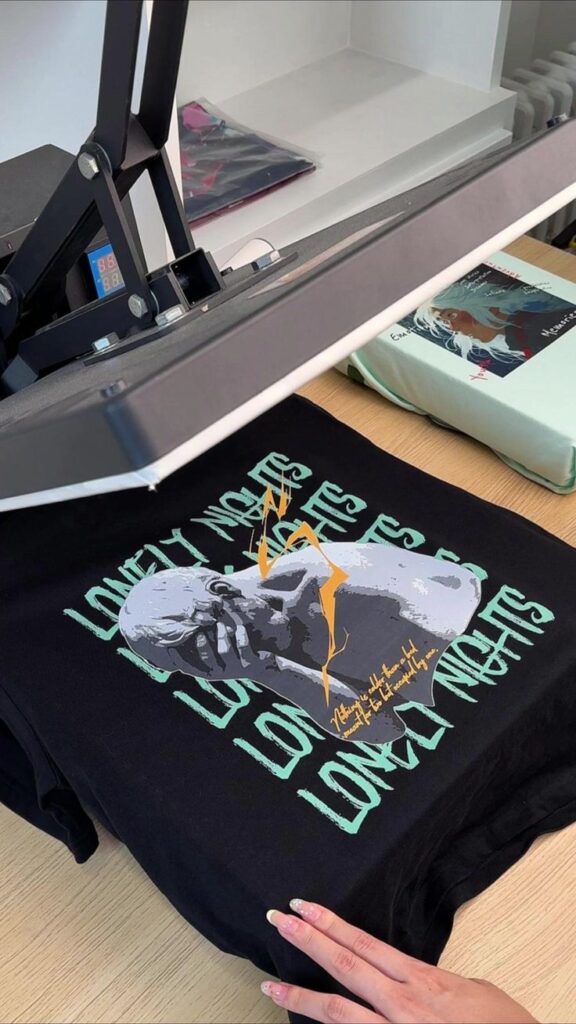
Step 2 – Heat press and backing application
A stabilizer goes under the garment. This keeps fabric steady so nothing shifts during stitching. Without it, edges can move slightly and ruin alignment.
Step 3 – Tack-down stitching
Fabric pieces get placed on the garment and lightly stitched down. This step is just to hold everything in place before final stitching starts.
Step 4 – Satin stitch border
A tight stitch runs around the edges. This is where the design gets its final shape. It locks fabric in and stops fraying over time.
Step 5 – Final inspection
Each piece gets checked for alignment, stitch quality, and edge finish. Small errors get fixed before packing.
Most factories now rely on an appliqué embroidery machine setup for this flow because it keeps output stable when orders scale up.
Types of Appliqué Embroidery
Different styles show up depending on design goals and garment type.
1. Standard Appliqué
Flat fabric shapes stitched onto clothing. Used for logos and lettering most of the time.
2. Reverse Appliqué
Top layer gets cut away to reveal fabric underneath. Creates depth without adding extra pieces.
3. 3D or Multi-Layer Appliqué
Multiple fabric layers stacked for a raised look. Common in streetwear drops.
4. Raw Edge vs Turned Edge
Raw edge keeps fabric edges visible for a rough finish. Turned edge hides them for a cleaner look.
Design teams often test different applique embroidery design styles before locking production.
Best Fabrics for Appliqué Embroidery
Fabric choice changes everything in the final result.
Cotton: Cotton is the easiest to work with and holds stitching well.
Felt: Felt gives thickness and is common in varsity pieces.
Denim: Denim brings durability for casual wear.
Leather: Leather and faux leather give a premium finish but need careful handling.
Fabrics: Performance fabrics show up in sportswear where stretch and movement matter.
This part is key in fabric appliqué embroidery because each fabric reacts differently under heat and stitch pressure.
Appliqué Embroidery Cost Breakdown
What affects the price?
Cost depends on how complex the design is, what fabric is used, and how many layers are involved. Bigger designs and tighter stitching take more machine time.
Typical price ranges
Small logo embroidery in bulk usually sits around $5 to $12 per piece. For jackets and bigger placements like back panels, cost usually moves into the $12 to $25 per piece range, depending on stitch density and fabric type. Heavy or layered designs can go even higher in some cases. Large back designs or multi-layer work often reach $18 to $35+ per piece.
Bulk order discounts
Larger runs bring cost down fast. Machines stay running longer, setup time gets shared, and waste drops.
Many brands go for custom appliqué embroidery when they want control over design without blowing up production costs.
Best Uses for Appliqué Embroidery
Appliqué shows up wherever brands want strong visibility such as:
- Varsity jackets are the most obvious use.
- Hoodies and sweatshirts use it for bold graphics.
- Corporate uniforms rely on it for durable branding.
- Sports teams use it for jerseys and merch.
- Kidswear uses it for colorful shapes that stand out.
A lot of planning starts when brands ask what is appliqué embroidery used for in real production work.
Appliqué vs Other Embroidery Types
Appliqué vs Chenille: Chenille feels fuzzy and textured. Appliqué feels sharper and more structured.
Appliqué vs 3D Puff: 3D puff uses foam under thread to raise designs. Appliqué builds volume using fabric layers instead.
Appliqué vs Flat Embroidery: Flat embroidery is thread-heavy and detail-focused. Appliqué works better for bold shapes and big graphics.
Production choice often comes down to the appliqué embroidery process and how the final garment needs to look in real use.
Why Clothing Brands Choose Appliqué Embroidery at Asiantex
Appliqué embroidery for clothing brands works well because it delivers strong visuals without slowing production too much. Large designs that would take long hours in thread embroidery can be produced faster using fabric pieces.
It also keeps costs under control, especially in bulk orders. Durability stays strong since stitched fabric layers hold up well in daily wear. Designers like it because it allows mixing textures and colors in one design without overcomplicating production.
Some factories build their name as a best appliqué embroidery manufacturer by keeping results consistent across large orders. At Asiantex, appliqué is used to help brands balance design flexibility with production efficiency, especially when working on bulk collections. Many also combine this with services like Screen Printing Services in USA for mixed decoration styles.
Appliqué Embroidery Care Instructions
- Cold water helps keep fabric stable. Strong detergents can weaken stitching over time.
- Air drying works best. High heat can cause edges to lift or shrink slightly.
- Flat storage helps keep shape. Hanging heavy appliqué garments for long periods can stretch stitched areas.
Some suppliers include care guidance through their appliqué embroidery company support so brands can maintain quality after sale.
Conclusion
Appliqué stays popular because it gives brands a simple way to build bold designs without slowing production or overloading cost. Understanding what is appliqué embroidery helps when planning garments that need both structure and visual strength, especially when working with a Clothing Manufacturing and Design Company that manages design and production together. From streetwear to uniforms, it fits across categories where durability and design matter at the same time.
Working with experienced appliqué embroidery services in USA helps brands keep production steady while scaling collections across seasons without quality drop.
FAQ’s
1. How much does appliqué embroidery cost per piece?
Small logo work in bulk usually sits around $5 to $12 per piece. Bigger pieces like jacket backs or layered designs can move up to $18 to $35+ per piece.
2. What’s the minimum order for appliqué embroidery?
Most setups don’t really take one-off orders. A normal starting range is around 10 to 25 pieces per design. Smaller runs can be done, but per-piece cost tends to go higher.
3. How long does appliqué embroidery last?
It holds up well when production is done right. Solid stitching and proper fabric choice usually mean it survives regular wear and washing for years without issues.
4. Is appliqué embroidery durable?
Yes. It’s made for daily wear. Fabric is stitched straight onto the garment and edges are locked in. So it doesn’t come off easily. That’s why it’s common on hoodies, jackets, and uniforms that get heavy use.
5. What fabrics work best for appliqué?
Cotton is the easiest to work with. Felt gives a thicker, more raised look. Denim works for heavier garments. Leather or faux leather brings a more premium feel. Performance fabrics are used when stretch and movement matter.
6. Can appliqué be combined with other embroidery?
Yes, and it’s done often in real production. Appliqué usually forms the main shape, while thread embroidery handles smaller details like outlines or text. Printing sometimes gets added too, depending on the design.
7. What’s the difference between appliqué and patches?
Patches are made separately and then attached later. Appliqué is built directly into the garment during production. That’s why appliqué feels more “part of the fabric,” while patches sit on top.
8. What industries use appliqué embroidery?
Fashion brands use it, sportswear too, along with school uniforms, corporate clothing, and streetwear labels. Anywhere bold branding is needed, it tends to show up.
9. How do you price appliqué embroidery?
No fixed chart for it. Cost depends on design size, stitch work, fabric type, and order volume. Simple pieces stay lower. Bigger or layered ones take more machine time, so they cost more.
10. How is appliqué different from screen printing?
Screen printing lays ink on top of fabric, so it stays flat. Appliqué uses fabric pieces stitched onto the garment, which gives a raised, textured feel. Printing works better for flat graphics.